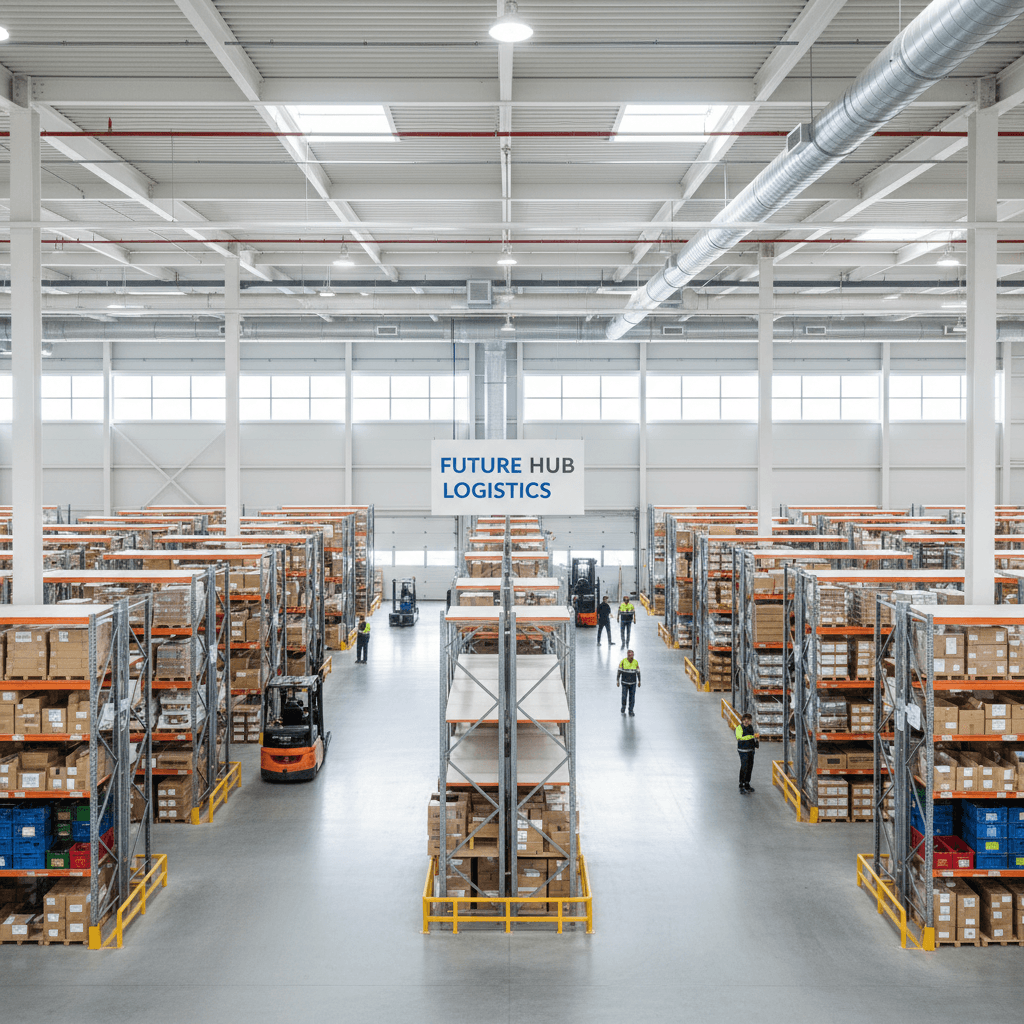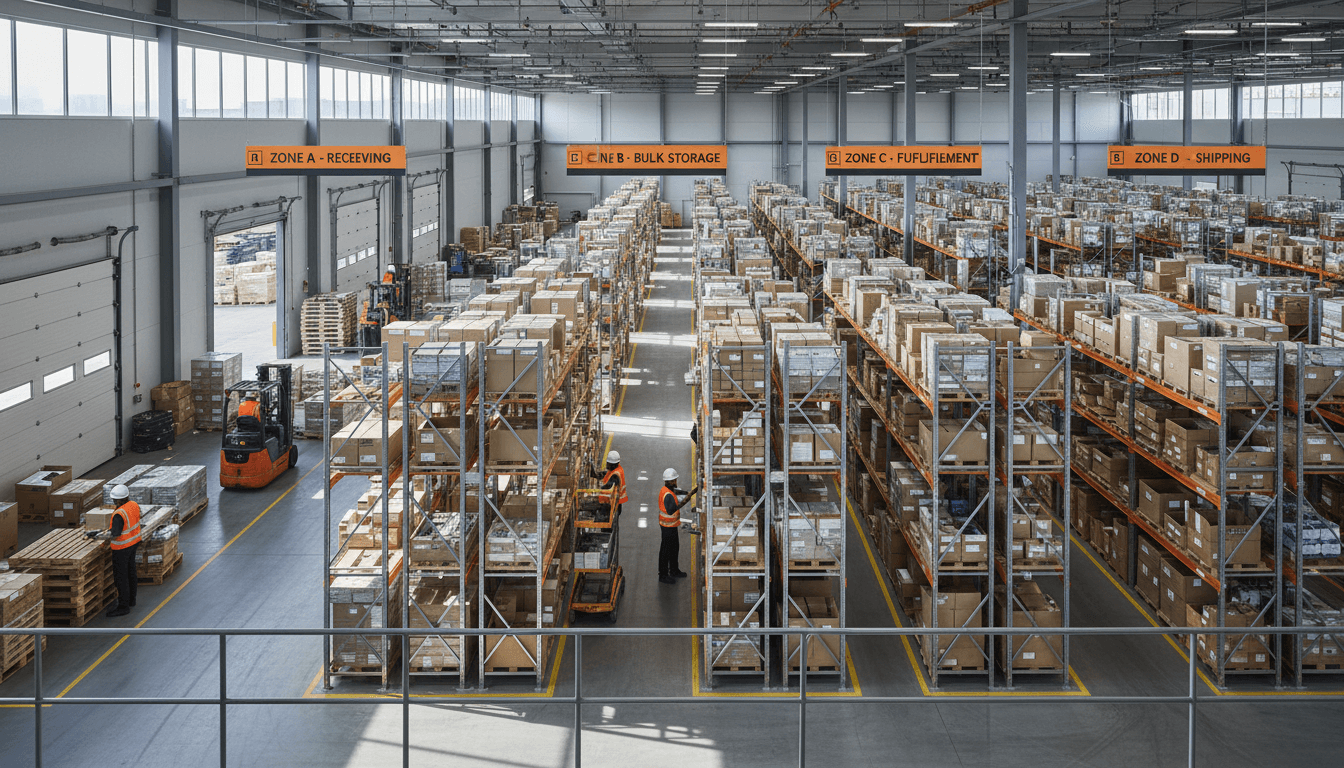
Optimizing small business warehouse storage involves maximizing vertical space with specialized racking and implementing cloud-based inventory tracking to streamline fulfillment. Scaling successfully requires businesses to balance efficient facility layouts with flexible logistics solutions that accommodate growth without significantly increasing overhead costs.
As your orders climb and your inventory spills into every available corner of your office or garage, the initial thrill of growth often gives way to operational friction. Managing logistics from a cramped environment leads to mispicked items, delayed shipments, and stifled scalability. At Duchesne Warehouse, we recognize that professional storage is not merely about square footage; it is a strategic asset that supports your long term success. This guide examines the essential transition from informal storage units to professional warehousing solutions. You will learn to identify the five primary signs that your business has outgrown its current space, explore industry specific triggers for manufacturers and retailers, and understand the logistical differences between self storage and professional facilities. Finally, we provide a roadmap for moving your inventory and maintaining efficiency in a new, scalable environment.
The Transition from Storage Unit to Professional Warehousing
In Duchesne and throughout the Uintah Basin, many successful ventures begin in a spare bedroom, a home garage, or a local self-storage unit. While these options provide a low-cost point of entry for a startup, they eventually reach a breaking point where they hinder growth rather than facilitate it. Transitioning to professional small business warehouse storage is a strategic move that shifts your focus from mere "keeping stuff" to active logistics management.
The core difference lies in the infrastructure. A managed warehouse offers professional-grade security and specialized accessibility that self-storage cannot match. Instead of navigating narrow hallways with a hand truck, you gain access to loading docks and floor layouts designed for pallet movement. More importantly, managed solutions prioritize inventory control. While a storage unit is often a static box where items are difficult to track, professional warehousing provides the structural organization needed to maintain clear sightlines on stock levels.
Learning more about Duchesne Warehouse helps clarify how these facilities act as an engine for scaling businesses. Moving into a dedicated facility allows for reliable warehouse services that include systematic handling and scalability, ensuring your supply chain remains fluid as order volumes increase. If you are unsure if your current space is adequate for your next growth phase, you can contact our logistics experts to discuss your specific volume and inventory requirements.
5 Signs Your Business Has Outgrown Its Current Storage

Recognizing when your current setup has reached its limit is vital for maintaining profitability. If you are experiencing any of these five signals, your logistics infrastructure is likely hindering your ability to scale.
Inventory Blind Spots: When boxes are crammed into every corner, it becomes impossible to perform accurate cycle counts. You might find yourself over-ordering items you already have simply because they are buried behind other stock. This ties up cash flow in redundant inventory that sits idle.
Fulfillment Lag: Efficient order fulfillment should be a streamlined process. If your team takes more than 15 minutes to pick, pack, and label a single shipment because they are navigating physical obstacles, your labor efficiency is dangerously low. A professional layout at Duchesne Warehouse ensures that paths are clear and high-turnover items are easily reachable.
Safety Hazards: In an overcrowded environment, safety is often the first thing to be compromised. Boxes stacked dangerously high or aisles that have become too narrow for safe passage increase the risk of workplace injuries and property damage. Maintaining clear, marked aisles is a hallmark of reliable warehouse services and a necessity for a professional operation.
Operational Bottlenecks: Growth requires the ability to say yes to new opportunities. If you are turning down large contracts or bulk-buy discounts from suppliers because there is literally no room for the freight, your storage situation is actively shrinking your market share. Transitioning to professional small business warehouse storage removes this ceiling, allowing you to accept inventory based on market demand rather than floor space.
High Shrinkage: Clutter leads to damaged goods and lost items that only reappear during annual audits. When inventory is frequently moved to access other products, the risk of breakage spikes. Inventory that is lost in the chaos is essentially a direct tax on your bottom line.
It is helpful to consider the 80:20 rule in this context. Typically, 80 percent of your revenue is generated by 20 percent of your stock. If that vital 20 percent is buried or difficult to reach due to poor organization, you are effectively slowing down your most profitable assets and losing money every day. Learning more about Duchesne Warehouse can help you understand how managed space keeps your top-performing products accessible. If these signs sound familiar, you can contact our logistics experts to evaluate how a scalable footprint can restore your operational flow.
Industry Specific Triggers: Manufacturers, Retailers, and Service Providers

Specific operational triggers vary depending on your sector. While a retailer worries about peak season volume, a manufacturer might be more concerned with the physical integrity of their workflow. Identifying these industry-specific milestones helps you decide when to engage reliable warehouse services to maintain your momentum.
For manufacturers, the primary trigger is often a crowded shop floor. When raw materials, such as raw lumber, metals, or textiles, compete for space with finished products, production efficiency plummets. Using professional small business warehouse storage allows you to separate these stages. This separation prevents production dust or debris from contaminating ready-to-ship goods and creates a safer, more linear workflow on the manufacturing floor. Moving finished goods out of the production zone immediately after quality control ensures that your workspace remains dedicated to creation rather than clutter.
Retailers face different pressures, primarily revolving around inventory fluctuations. Seasonal surges require a sudden influx of stock that a fixed lease space often cannot accommodate. Rather than paying for square footage that sits empty half the year, managed warehousing offers scalable pallet positions. This flexibility means you can increase your storage footprint during peak sales periods and scale back when inventory clears, optimizing your overhead and ensuring you never pay for air. This model is particularly effective for businesses in the Uintah Basin that experience cyclical demand.
Service-based businesses, including HVAC, plumbing, and oilfield services, often outgrow their current space when equipment security and parts organization become unmanageable. Professional storage provides a secure environment for high-value tools and a systematic way to categorize maintenance parts. This organization is critical for rapid deployment, ensuring crews can grab precisely what they need for a service call without digging through disorganized piles. Learning more about Duchesne Warehouse reveals how local businesses can leverage these flexible footprints to adapt to changing project demands. If your specific industry requires a specialized layout, you can contact our logistics experts to map out a storage plan that supports your daily operations.
Self Storage vs. Professional Warehouse Storage for Small Business

Entrepreneurs frequently ask if it is possible to run a small business in a storage unit. While you can technically store inventory there, these facilities are fundamentally designed for static, long-term dormancy rather than active commercial operations. The physical limitations of self-storage often become a ceiling for growth. In contrast, professional small business warehouse storage is engineered for the high-frequency movement of goods and professional logistics.
Feature | Self-Storage Unit | Professional Warehouse |
|---|---|---|
Primary Purpose | Residential or dormant storage | Fluid inventory & distribution |
Freight Access | Curb-side or narrow hallways | Industrial loading docks |
Climate Control | Often basic or non-existent | Regulated to protect sensitive stock |
Movement Design | Static (staying put) | Dynamic (in and out) |
Support Level | DIY / Unmanaged | Professional inventory handling |
Self-storage units rarely offer the infrastructure needed for efficient shipping and receiving. Forcing employees to break down pallets on a sidewalk or haul heavy boxes through narrow corridors is a recipe for fulfillment delays and workplace strain. A professional facility provides the loading docks and wide-access aisles necessary for pallet jacks and forklifts to operate safely. These features are standard when utilizing reliable warehouse services, ensuring that freight can be received and dispatched without physical bottlenecks.
Furthermore, self-storage offers zero inventory management support. It is simply a dark room with a lock. Learning more about Duchesne Warehouse highlights the value of a managed environment where the layout is optimized for cycle counts and rapid picking. When your storage space is designed for professional logistics, it becomes a tool for efficiency rather than a hidden cost. If your current setup prevents you from receiving full-size pallets or tracking stock accurately, contact our logistics experts to evaluate a transition to a scalable warehouse environment.
The Logistics of Moving: Transitioning Your Inventory

Moving from a garage or cramped self-storage unit to professional small business warehouse storage requires a systematic approach to avoid operational downtime. Before the first truck is loaded, perform a full inventory audit. This is the ideal time to purge dead stock and integrate inventory management software that tracks quantities in real time, ensuring your digital records match your physical reality from day one.
Use this checklist to streamline the transition: 1. Conduct a pre-move audit to reconcile physical stock with existing records. 2. Label every bin and pallet with a systematic alpha-numeric code for precise tracking. 3. Map your new layout to utilize vertical storage, placing heavier items on lower rack levels. 4. Test your inventory software integration to ensure data flows correctly between your sales channels and the warehouse.
Professional facilities are designed for height. Transitioning to vertical storage allows you to maximize the cubic volume of the building, which significantly improves cost efficiency compared to stacking items on a flat floor. When budgeting for your move, calculate your warehouse storage cost per pallet or per month rather than just square footage. This granular view of expenses helps you understand the exact overhead associated with each unit of inventory. If you are preparing for a move, learning more about Duchesne Warehouse can help you understand how high-density racking changes your storage capacity. Utilizing reliable warehouse services ensures your stock is handled safely during this pivot. If you need help calculating your specific pallet footprint, you can contact our logistics experts for a consultation on space requirements.
Maintaining Efficiency in Your New Scalable Space
Once the physical transition is complete, the focus shifts to maintaining the operational integrity of your new small business warehouse storage. A common pitfall for expanding businesses is allowing additional square footage to mask underlying inefficiencies. To prevent this, organize your layout based on SKU turnover rates. Placing high-frequency items near the loading zone reduces travel time and wear on equipment, while slow-moving stock can occupy higher or more distant racking positions.
Sustaining this efficiency requires a commitment to clear, marked aisles and designated staging areas. Use industrial floor tape or paint to define traffic lanes for pallet jacks and pedestrian paths. This level of organization is not merely aesthetic; it is a critical safety protocol that prevents collisions and ensures emergency exits remain unobstructed. When aisles are kept clear and inventory is correctly slotted, your team can fulfill orders with the speed required to stay competitive in the Uintah Basin market.
Partnering with a facility that offers reliable warehouse services ensures that these standards do not slip as your volume increases. Professional management oversight helps keep the space disciplined, transforming your storage into a strategic asset rather than an unmanaged cost center. To learn more about Duchesne Warehouse and how we support long-term organization, contact our logistics experts to discuss an ongoing storage strategy that evolves alongside your inventory levels.
Managing warehouse growth effectively means finding the right balance between space and efficiency. As your small business reaches new milestones, your logistics strategy must evolve to support that momentum. If you want expert help navigating these complex transitions, our team is ready to support your unique operational needs. You can learn more about how we streamline inventory and storage by exploring our Services. We are committed to helping your business scale smoothly while you focus on your core mission.